
Scope The Belief Burden
A small claim doesn't need a mountain of evidence, but we marketers tend to pile it on anyway and, as a result, create a different problem where a prospect starts wondering why we're working so hard to convince them of something that should be obvious (Hamlet, anyone?). Credibility is achieved by matching proof to the size of the leap you're asking someone to take. Ergo, calibration is slightly more important than persuasion. How so?
Your Brand Isn't Transmitted. It's Reconstructed.
We marketers often talk as if "brand perception" were a signal being faithfully received, with any gap between intention and perception chalked up to noise or poor execution. The gap, however, is structural because perception has always involved construction, not transmission, so keep in mind your customer's brain is a renderer and not a mirror.

We Have A Trust Problem, Not Just A Reach Problem
I can hear it now, "What did you think was going to happen?" We say people are tired of scrolling. But people scroll for hours a day, happily, when the content is good. So scrolling can't be the disease. The disease has to be something more specific, perhaps a learned defensiveness. We users have been trained, ad by ad, to treat the feed as a place where we get interrupted rather than a place where we participate.

Durable Business Is Built On Patterns
None of this reduces to a formula.
The most successful businesses have found value where formulas say there isn't any. Why? Because formulas optimize for what's measurable now, when it is more valuable to ask what's true regardless of the moment.
Consider growth for a moment. If you chase it above everything, you'll miss asking: Will this business exist in ten years? A company that grows fast but can't defend what it built is just borrowing time because durability is an important test growth has to pass. Distribution illustrates the same idea from another angle. Superior sales and distribution, on their own, can build a monopoly even without a better product.

Substack, For Marketers: A Quick Primer
What it actually is: A publishing platform that fuses a blog, an email newsletter, and a subscriptions/payments system. Content lives on a public web page and lands in inboxes simultaneously, so creators can publish articles, essays, podcasts, and videos, with Substack handling payments, subscriber management, and analytics so writers can focus on content.

Incentives, Not Villains
Most marketers still navigate their work with a map that says "the internet is mostly people browsing." Using that map won't get you killed, but it will have you walking toward the cliff. Here is one consequence of the territory beneath us changing in real time.

Show The Work
We hate waiting without knowing why. This is the difference between a customer who tolerates friction and one who abandons the cart. Think about the last time you waited for something with a visible progress bar versus a frozen screen with no indication that anything was happening. The wait was probably similar in length, but your experience of it was not. That cue in the form of a progress bar, even when it's not perfectly accurate, gives you evidence of effort, which is something the blank screen doesn't.

That Is What Thought Experiments Are For
Some marketing professionals dismiss ethical thought experiments about their work because the scenarios feel contrived. Those reactions miss the point because thought experiments are not meant to replicate the reality of account management, creative briefs, or client retention pressures. They are designed to isolate a single difficult tradeoff so we can examine what we actually believe, and why. There is great value to be gleaned from dismissing the claim of oversimplification, embracing some self-examination, and considering the following scenario.

Why Doing More Made Things Worse
The instinct in most organizations when faced with declining signal quality is to respond with more: more personalization, more automation, more output, more speed. It is also, based on everything the data shows, making things worse.
• 40% percent of marketers report being buried in more work despite increased AI adoption.
• 18% percent use AI in any deep operational sense, with most using it to scale execution, not to improve the decisions underneath it.
Personalization was supposed to be the answer to all of this.

From Reaction to Decision
The core architecture of most marketing systems is reactive. A user takes an action, the system detects it, and a message goes out. That architecture made sense when consumer behavior was relatively stable and predictable but it breaks down when the behavior you're measuring is itself a response to the system.
• Abandon cart, get a discount
• The trigger fires
• The reward lands
• The pattern locks in
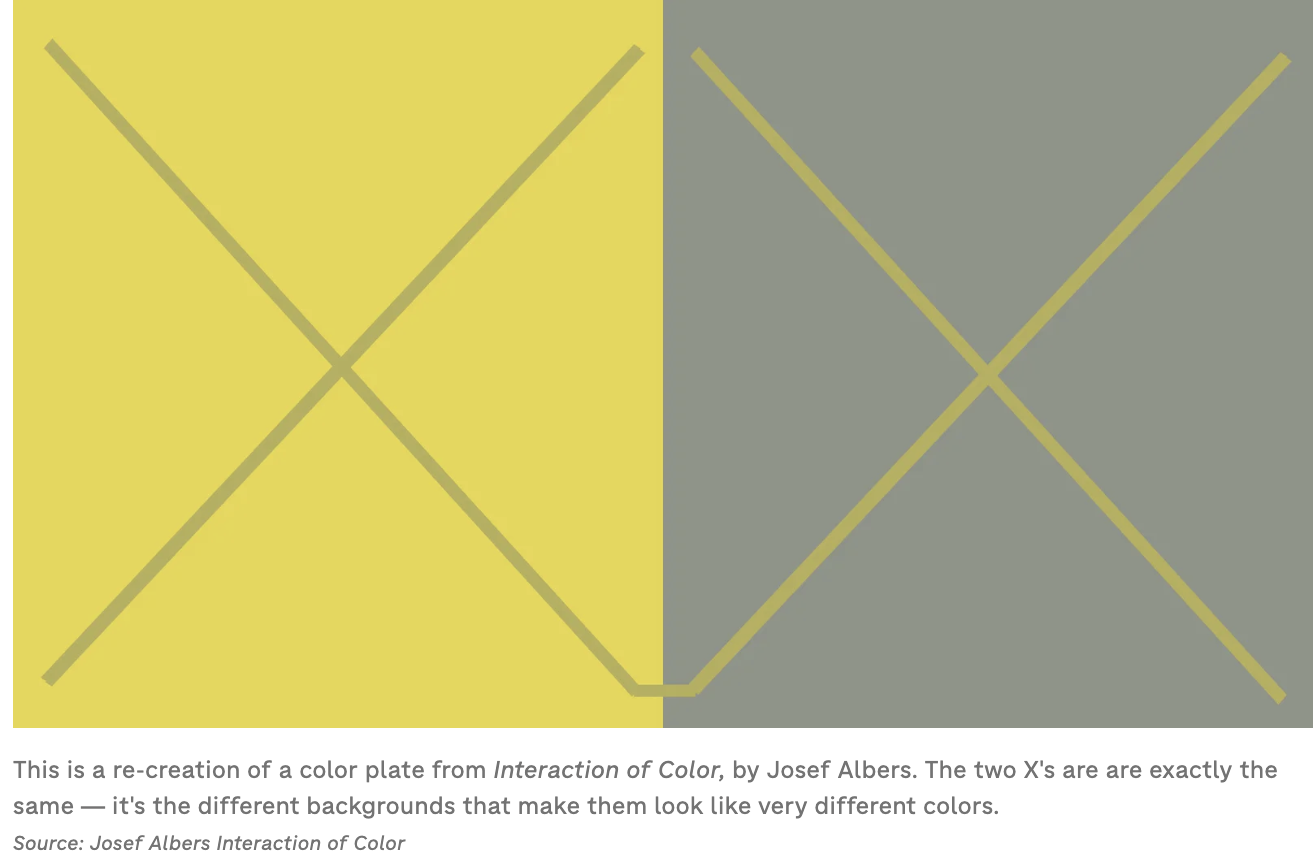
Same Paint. Different Story.
Most of us learned in school that objects have colors, and that their weight and dimensions are fixed, measurable, and inherent. But the science says otherwise. Color is a judgment the brain renders, not a fact it reads. And like every judgment, it is heavily shaped by context. Why does this matter? Let me color in between the lines for you.
Consumer perception works the same way, where people do not evaluate your product in isolation. They evaluate it inside the frame your campaign constructs, be it the background, the lighting, the typography, the whitespace, the adjacent imagery, or the accumulated expectations your category has trained them to carry. This means the same product can feel premium or generic, clinical or warm, trustworthy or forgettable, depending entirely on the perceptual environment you build around it. Therefore, you are not simply designing an object to be seen but also the conditions under which an inference gets made. Here are some ways to create optimal conditions:
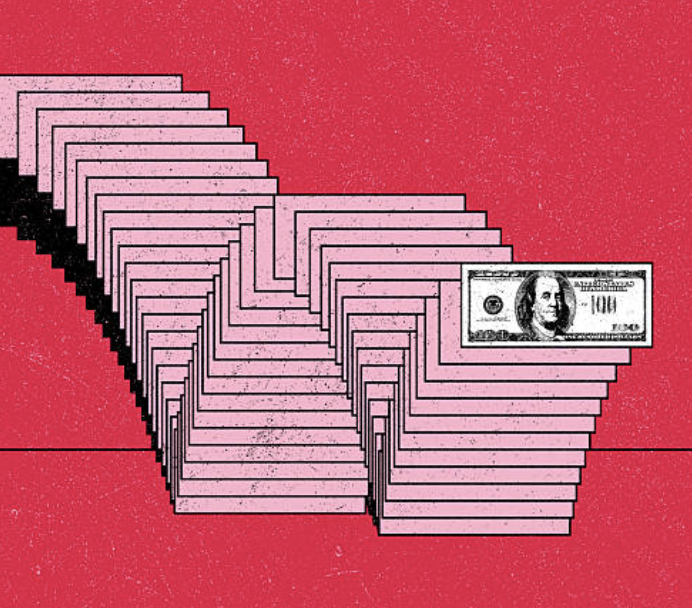
If Nobody Gets Value From Your Content Was It Valuable?
Valuable content that nobody engages with isn't valuable. It's just content. Sure, you can have a genuinely useful insight, a novel angle, a well-defined audience, and still produce work that goes nowhere. Value that isn't experienced has potential.

On Brand, Trust, And The Cost Of Short-term Thinking
There's a very specific kind of slow-motion disaster that happens inside companies, and it almost always looks fine from the outside right up until it doesn't. It all starts with the hard, often grinding timeline a brand traverses to earn trust over the years. Decades, sometimes. It earns it through consistent product performance, honest claims, and experiences that match the promise. Customers encode that trust into their memory, stop inspecting the product with a critical eye towards quality, and buy on autopilot. And that autopilot, that earned habitual confidence, is worth an enormous amount of money. However, that trust and confidence is also an asset that can be quietly liquidated.

Why You? No, Really. Why You?
Most of us doing marketing skip that question. Not because we're all lazy, but because we're too busy doing things we arguably shouldn't be doing. There's a quota to hit, a pipeline to fill, and a board meeting on Thursday. So we write the website copy, design the brochure, and launch the campaign, all without ever sitting down to honestly answer the one question every single customer is quietly asking: Why you?
If you don't know the answer to that one question, then it is entirely unreasonable to think your customer will. Why, better yet, how would they? And saying you are "innovative," "customer-focused," and "best-in-class" is not a correct answer. One could convincingly argue that they are the absence of one.

Yelling Into The Void
Every person who disagrees with your pitch, scrolls past your ad, or ignores your email is making a completely rational decision based on who they are and what they see. I used to think that was a failure of the intended audience, but then I realized it was valuable information being woefully underutilized.
Marketing at its core, is a generous act in the form of work that is helping someone solve a problem they actually have and not seeking the shortest path to customers for your products. There's an enormous gap between those two orientations, and almost every struggling brand is stuck on the wrong side of that line. Why is that?