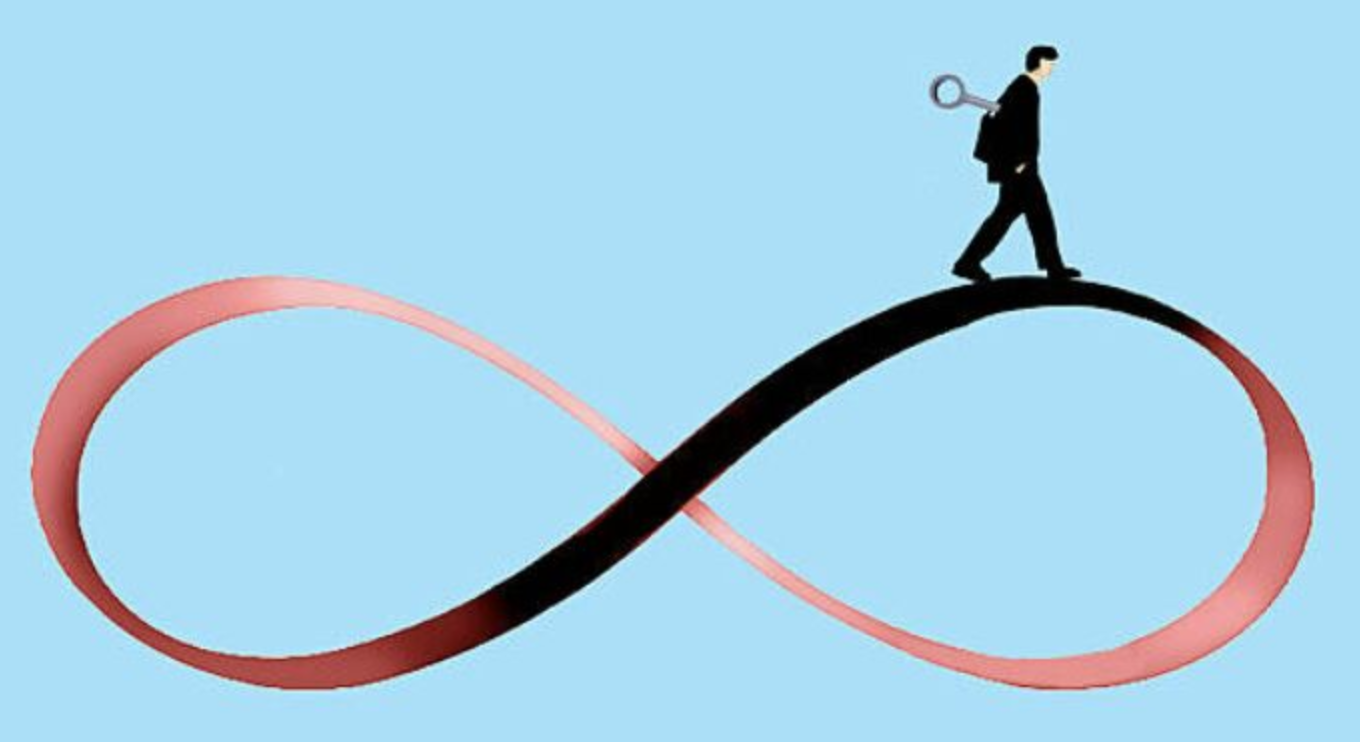
We Have A Trust Problem, Not Just A Reach Problem
I can hear it now, "What did you think was going to happen?" We say people are tired of scrolling. But people scroll for hours a day, happily, when the content is good. So scrolling can't be the disease. The disease has to be something more specific, perhaps a learned defensiveness. We users have been trained, ad by ad, to treat the feed as a place where we get interrupted rather than a place where we participate.

Durable Business Is Built On Patterns
None of this reduces to a formula.
The most successful businesses have found value where formulas say there isn't any. Why? Because formulas optimize for what's measurable now, when it is more valuable to ask what's true regardless of the moment.
Consider growth for a moment. If you chase it above everything, you'll miss asking: Will this business exist in ten years? A company that grows fast but can't defend what it built is just borrowing time because durability is an important test growth has to pass. Distribution illustrates the same idea from another angle. Superior sales and distribution, on their own, can build a monopoly even without a better product.

Incentives, Not Villains
Most marketers still navigate their work with a map that says "the internet is mostly people browsing." Using that map won't get you killed, but it will have you walking toward the cliff. Here is one consequence of the territory beneath us changing in real time.
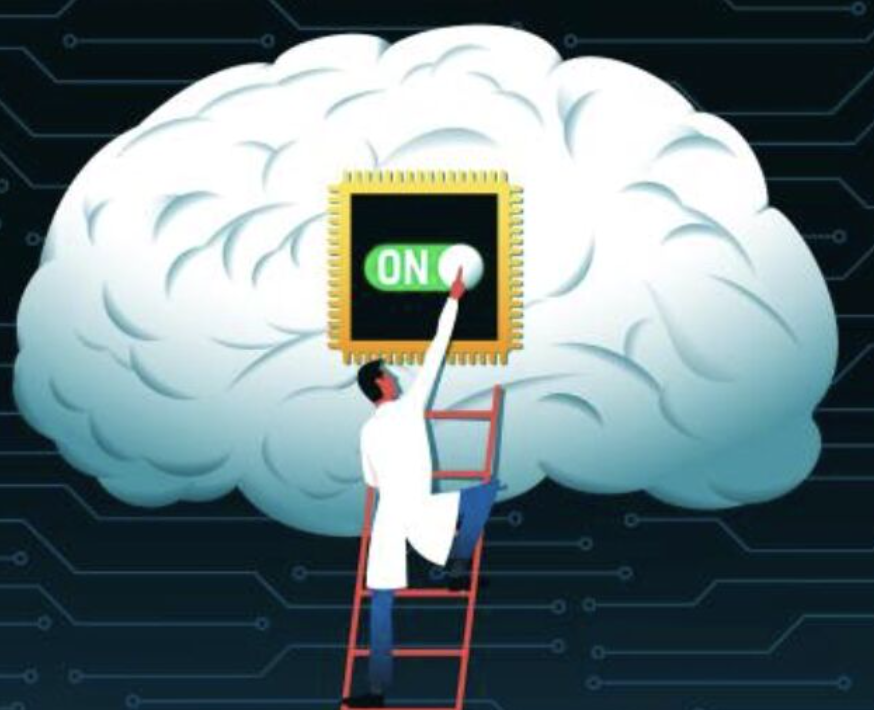
That Is What Thought Experiments Are For
Some marketing professionals dismiss ethical thought experiments about their work because the scenarios feel contrived. Those reactions miss the point because thought experiments are not meant to replicate the reality of account management, creative briefs, or client retention pressures. They are designed to isolate a single difficult tradeoff so we can examine what we actually believe, and why. There is great value to be gleaned from dismissing the claim of oversimplification, embracing some self-examination, and considering the following scenario.

From Reaction to Decision
The core architecture of most marketing systems is reactive. A user takes an action, the system detects it, and a message goes out. That architecture made sense when consumer behavior was relatively stable and predictable but it breaks down when the behavior you're measuring is itself a response to the system.
• Abandon cart, get a discount
• The trigger fires
• The reward lands
• The pattern locks in
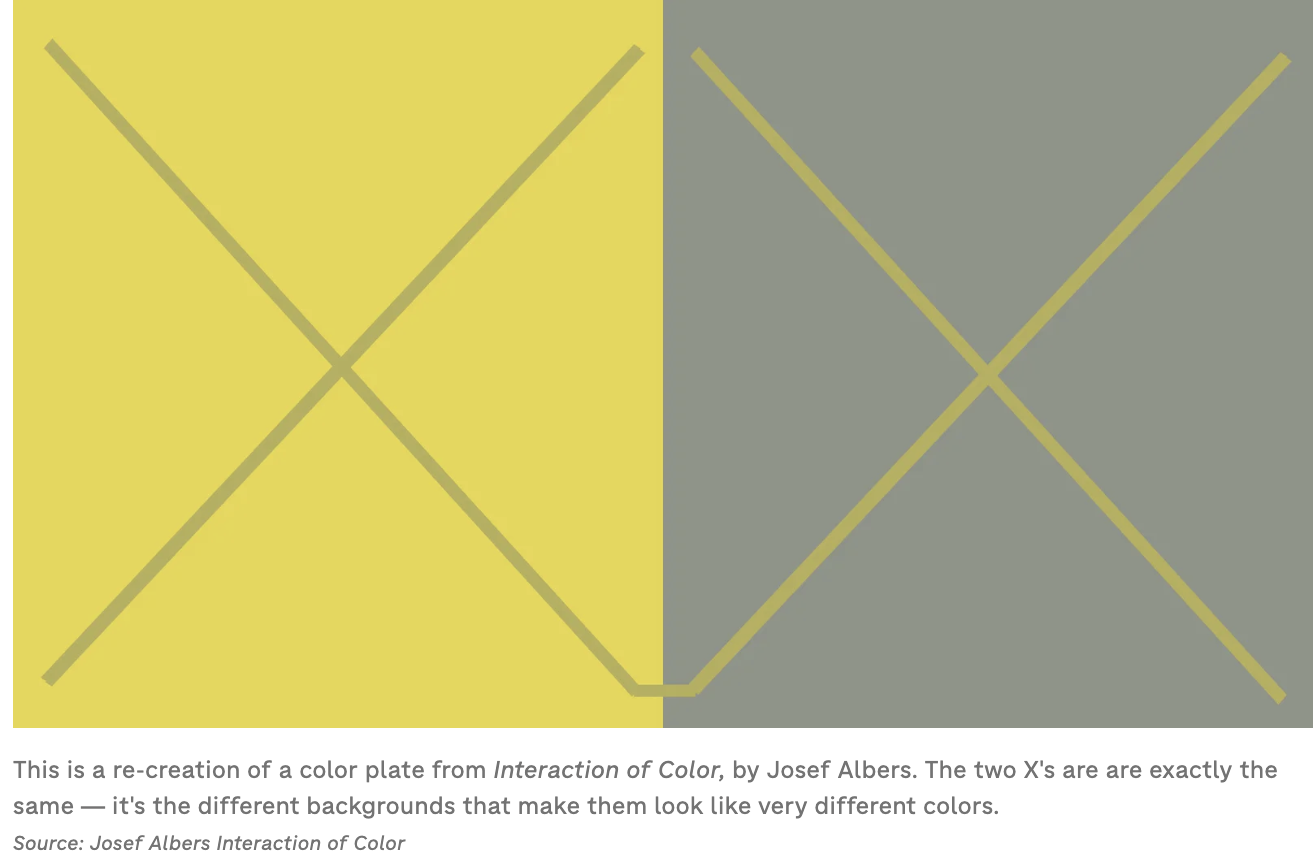
Same Paint. Different Story.
Most of us learned in school that objects have colors, and that their weight and dimensions are fixed, measurable, and inherent. But the science says otherwise. Color is a judgment the brain renders, not a fact it reads. And like every judgment, it is heavily shaped by context. Why does this matter? Let me color in between the lines for you.
Consumer perception works the same way, where people do not evaluate your product in isolation. They evaluate it inside the frame your campaign constructs, be it the background, the lighting, the typography, the whitespace, the adjacent imagery, or the accumulated expectations your category has trained them to carry. This means the same product can feel premium or generic, clinical or warm, trustworthy or forgettable, depending entirely on the perceptual environment you build around it. Therefore, you are not simply designing an object to be seen but also the conditions under which an inference gets made. Here are some ways to create optimal conditions:
On Brand, Trust, And The Cost Of Short-term Thinking
There's a very specific kind of slow-motion disaster that happens inside companies, and it almost always looks fine from the outside right up until it doesn't. It all starts with the hard, often grinding timeline a brand traverses to earn trust over the years. Decades, sometimes. It earns it through consistent product performance, honest claims, and experiences that match the promise. Customers encode that trust into their memory, stop inspecting the product with a critical eye towards quality, and buy on autopilot. And that autopilot, that earned habitual confidence, is worth an enormous amount of money. However, that trust and confidence is also an asset that can be quietly liquidated.
You Are Not Entitled To An Opinion. You Are Entitled To An Informed Opinion.
Most people remember Darth Vader saying, "Luke, I am your father." He never said it. The actual line is "No, I am your father." But millions of people who have seen the film dozens of times swear otherwise. This isn't a trick or a glitch in the Matrix. It's how human memory works, and if you're in the business of doing the art and science of marketing, this shouldn't stop you from being interested enough to keep reading.
This phenomenon has a name that you've maybe heard before: the Mandela Effect. This is when entire groups of people share the same false memory, with the same unshakable confidence.

Where Does Marketing Actually Live?
Most organizational charts lie about how marketing works through clean boxes and reporting lines, but they hide the real question of where marketing ends and everything else begins. The answer matters because unclear boundaries create confusion and conflict that masquerade as strategy disagreements:
• Sales complains marketing doesn't deliver leads.
• Marketing complains sales don't follow the narrative.
• Product says marketing overpromises.
• Strategy says marketing doesn't understand the market.
Personality conflicts? Maybe a fraction, but they're symptoms of undefined decision rights and a misunderstanding about marketing being the translation layer between strategic intent and market reality. How so?
The Measurement Illusion: Nothing Is Truly Quantifiable
Despite the beliefs of some psychologists and promises of Martech vendors, nothing related to human psychology and behavior is absolutely quantifiable. Nothing. But we live in an era of attribution models, conversion funnels, and predictive analytics, complete with dashboards that promise precision and a clear course of action. This mathematical certainty is largely an illusion because we human beings aren't equations. We're messy, contradictory, and influenced by thousands of unmeasurable variables, including the fight someone had that morning, the song in their head, the memory triggered by your brand color, and the cultural context they bring to your message.

The Cost of Imprecision or Why Precision Matters
Marketers routinely invoke psychological concepts to explain consumer behavior and design campaigns. We speak about "creating FOMO," "leveraging social proof," and "avoiding cognitive dissonance." But many psychological terms don't mean what marketers think they mean.
Misunderstanding psychological mechanisms leads to misapplied strategies, wasted budgets, and failed campaigns. Worse, it leads to unethical practices based on flawed assumptions about how influence works.

Your Decisions Are Shaped Before You Ever Make Them
Your Decisions Are Shaped Before You Ever Make Them
We marketers have built entire functions around the assumption that choice happens in the moment, at the shelf, on the landing page, during the demo. Unfortunately, choice isn't a point-in-time event. It's the endpoint of a long chain of impressions, exposures, and associations accumulating long before your customer enters an active buying cycle. You're probably thinking this is just semantic. It's not. Why? Because you aren't just competing for attention in-market engineering, you're trying to shape the mental habitat in which their selection feels inevitable.

Read Books And Become Better At What You Do
Yes, it's important to keep abreast of the latest technological developments and tools of the moment for reasons that are not germane to this musing. And it is equally important to read (or listen to) books that reveal the consistent and pervasive variables of human nature. Why? Because within those books are timeless truths that will help you better understand how to communicate in an impactful and even meaningful way with the audience you seek to serve.

84% Is Only 16% Less Than 100%
84% of purchase decisions are made before shopping even begins, according to new research tracking 1.2 million consumer journeys across 200+ categories, meaning that by the time your prospect actively shops, the decision is already made.
Over months and years, your favorite and not-so-favorite brands build neural pathways beneath your conscious awareness so that when the buying moment arrives, what feels like a rational choice is actually the echo of impressions accumulated long ago.

Corporate Identity Is Not Brand Identity
Corporate identity is more than your logo and color scheme. It is the entire ecosystem through which your organization presents itself to the world. While brand identity focuses narrowly on customer perception, corporate identity encompasses much more, including how employees, investors, and the broader public understand who you are as an organization.